Sunday, February 12, 2017

Assault on Truth


As most know, Hans Rosling passed away this week. As a Sunday reflection, a few timely sentences from Keith Devlin, in tribute to him, via a comment at his own blog:
“For all his engaging presentation skills, the numbers were at the heart of Rosling's talks. It was not his oratory that convinced us, in an instant, that our preconceptions of our world were wrong -- often violently so. It was the data -- the numbers displayed on the screen in front of us…“As it happens, Rosling's death comes at a moment in time when people in highly powerful positions are waging an assault on scientific facts, on numerical data, and indeed on truth in general…“An attack on truth is an attack on Society in general. Those of us whose lives revolve around discovering and communicating numerical and mathematical truth have a duty to speak up forcefully, in opposition. If our Society loses the respect for, and dependency on, truth, the loss of mathematics will be the least of our worries.”


Thursday, February 9, 2017

Raymond Smullyan, A Knight Among Men... +ADDENDA


"Recently, someone asked me if I believed in astrology. He seemed somewhat puzzled when I explained that the reason I don't is that I'm a Gemini." -- R. Smullyan


At a time when we need his likes more than ever, brilliant polymath Raymond Smullyan has died at the age of 97. One of the undersung thinkers of our times — with a name far less well-known to the public than several other mathematicians.
As word gets out, I’m sure there will be many wonderful tributes to follow, but for now, I’ll just leave here a few of the Tweets I quickly found popping up:
from @shanewag1 :
Very sad to say goodbye to one of the world's great polymaths. Rest In Peace, Smullyan. There was something a little wrong with dualism. 

from @mathematicus :
I don't really do heroes but if I did Smullyan would be one of mine

from @J_Lanier :
The brilliant and playful Raymond Smullyan has passed away. I am grateful for the many happy hours I've spent reading and sharing his books.

from @bphopkins :
RIP the great Raymond Smullyan, many of whose books I shall someday gleefully subject my children to. So goes the Dao.

from @BradleyPallen :
The two sentences in this tweet are false.
Raymond Smullyan will never die.

I'll mention again that Jason Rosenhouse edited a nice tribute volume, "Four Lives," to Smullyan some years back:
http://amzn.to/2lndLfw

Smullyan is best known for his logic works (both recreational and academic), but he also wrote several volumes on "spirituality." The best known was probably "The Tao Is Silent," but my own favorite is perhaps "A Spiritual Journey."

And lastly, I'll end with one more quote from Raymond:
"A joke is told that Epimenides got interested in eastern philosophy and made a pilgrimage to meet Buddha. He said to Buddha: 'I have come to ask you what is the best question that can be asked and what is the best answer that can be given.' Buddha replied: 'The best question that can be asked is the question you are asking and the best answer that can be given is the answer I am giving.'"
--------------------------------------------------

==> [It’s now 2:30pm EST and I had expected by now to see some more official notice or more-detailed obituary for Dr. Smullyan than the Facebook posting that started the news. I've seen at least a couple of people pass the news along who I don’t believe would have done so if they were not certain of its validity, but once some more official press links are available I will add them here.]

==> Apologies, that I may have multiple updates to this post as warranted…
For those who haven’t seen it, the initial news on Raymond was broken by a Facebook post from a personal friend HERE. 
I only just now noticed the post’s date is Feb. 7, saying Dr. Smullyan died “yesterday” (so, I assume Feb. 6), making it even more surprising that there are by now (3 days later) no formal press releases (though the poster does say she expects the NY Times to have a “big tribute” to him soon. Who knows what clever final instructions the iconoclastic Smullyan may have left for any announcements of his death… or alternatively, perhaps his lesser name recognition (compared to say his dear friend Martin Gardner) is causing a delay in more details getting out.

In any event, stay tuned… Raymond straddled a world between mathematicians, logicians, philosophers, recreationalists, cognitive scientists, academics, and layfolk… and musicians and magicians… and punsters ;) and he deserves the highest recognition.

==> 2/10/17  Perhaps Raymond has left us, as he lived, giving us one more puzzle to ponder. I awoke at 5 this morning and immediately searched Web for official news of his demise, and still it awaits. People have repeatedly tried to edit his Wikipedia page only to be rebuffed by editors who are also waiting for official confirmation. Maybe Feb. 11, being a prime number, will be the day of notification (…and I’m only half-joking). 
For those repeatedly asking, no, I think it clear this is not any sort of hoax or prank, but for whatever reason, and despite his worldwide fan base, official news just hasn’t come yet. I did glean from all my searching that Dr. Smullyan apparently died “peacefully in his sleep” from “complications of a stroke,” I believe the evening of Feb.6.
And I have to admit there is something almost delicious, that even in death, Dr. Smullyan continues to puzzle us from the great beyond.

For any readers who don’t know much about Smullyan or wonder why I'm spending this much time on him, until longer tributes appear, you can get a feel for him and his impact from the messages flowing in on this Facebook page:

==> Wikipedia page finally updated based in part on this account:

Probably much more to follow in next 24 hrs.

2/11/17 : The NY Times has weighed in with their obituary:


Tuesday, February 7, 2017

"Now" for a Book Blurb


In my 2016 end-of-year book wrap-up I briefly mentioned that Richard Muller’s book, “Now” (focusing on the nature of time and entropy) was one popular physics book I was looking forward to reading. I’ve now read it, and generally do recommend it (finding it less inscrutable and more satisfying than most popular physics books)… but with a caveat. While the volume has had mostly positive reviews there have been a few negative ones that are often put off by a couple of chapters near the end of Dr. Muller’s book. Muller is known as a rather independent thinker with a gadfly streak, and toward the end includes significant discussion that some will find too metaphysical (almost supernatural). I actually enjoyed seeing a physicist’s take on such matters, but some won’t. He is especially skeptical of “physicalism,” the approach most physicists take to scientific study; i.e. that everything is ultimately explainable in terms of “physical” elements that we do or can eventually understand. 
One of the examples he uses over and over of something we simply don’t understand is what it means to “see” the color “blue,” nor do we know if other people see (inside their brains/minds) blue the same way we see it. This is one of those profound questions that many children ask (and never receive an adequate answer), and you either get what he means by the query or you don’t. Philosophers have long discussed it at length, with no resolution. He also dives into a long discussion of free will, and why he views it as incompatible with "determinism" (some don't), again a topic too philosophical for many. 
One can get even more abstract by asking what does it mean to feel “wonder,” or “awe,” or “love,” and if these are nothing more than neurons firing in certain patterns (as many would say), then can we construct robots that experience these “feelings.” Also, long amazing to me, as someone with an interest in psycholinguistics, is our lack of real understanding of how everyday speech is either produced or processed, even though all normal humans do it effortlessly. Anyway, I’m going far astray from the discussion Muller has, just as a way of saying I’m not put off by seeing a physicist talk about things he finds inexplicable within a “scientific” framework. But yes, the chapters do stick out a bit awkwardly in an otherwise empirical look at some of the deepest questions faced by physics theorists today.
For an actual review of the volume see here:
…and here, an excerpt from the book:


Sunday, February 5, 2017

Number Sense


Sunday reflection:
 "[Alain] Connes thinks that expert mathematicians are endowed with a clairvoyance, a flair, a special instinct comparable to the musician's fine-tuned ear or to the wine taster's experienced palate that enables them to directly perceive mathematical objects: 'The evolution of our perception of mathematical reality causes a new sense to develop, which gives us access to a reality that is neither visual, nor auditory, but something else altogether'."  
-- from "The Number Sense" by Stanislas Dehaene

Friday, February 3, 2017

Wednesday, February 1, 2017

Who Doesn't Want More Evelyn Lamb!


For all of you who were just saying to yourselves, 'Ya know I need to subscribe to just one more email newsletter'... have I got good news. Evelyn Lamb announces she will begin putting out such a newsletter, which she describes in a tweet as “Math, math, math (And other stuff)," and the first issue will even be today!
Go here to subscribe (…that’s an order!):


Sunday, January 29, 2017

the depths of existence...


Sunday reflection from Keith Devlin, on Euler's formula:

"Like a Shakespearean sonnet that captures the very essence of love, or a painting that brings out the beauty of the human form that is far more than skin deep, Euler's equation
[eiÏ€ + 1 = 0] reaches down into the very depths of existence."


Thursday, January 26, 2017

Update on Poker-playing Robot


A couple of weeks ago I mentioned that AI programs were now taking on poker, and a nice followups to that storyline appear this week:
In an ongoing Texas hold’em tournament a poker-playing robot named “Libratus” is so far up by almost $800,000 against its human competitors.
From the the first article: 
“Poker requires reasoning and intelligence that has proven difficult for machines to imitate. It is fundamentally different from checkers, chess, or Go, because an opponent’s hand remains hidden from view during play. In games of ‘imperfect information,’ it is enormously complicated to figure out the ideal strategy given every possible approach your opponent may be taking.”Further it is noted that “...an AI player has to randomize its actions so as to make opponents uncertain when it is bluffing.”
And from the 2nd article:
"One of the things Libratus does well is bluff..."Mastering the art of the bluff requires AI that can calculate risk and reward in real time without having perfect information about what its opponent can do in return. It implies the system does more than simply play a perfectly safe game where it only grinds out wins when it has the stronger hand."
Libratus is specifically programmed (as I understand it) to be skilled at just one specific poker game, so even if it wins this tournament (and it looks like it will, as it seems to be getting stronger over time), it doesn’t mean that bots are on the verge of taking over all professional poker… or, at least not yet. Of course the real congratulations go, not to the bot, but to the clever humans (in this case from Carnegie-Mellon) programming it.

Monday, January 23, 2017

Winning At Blackjack... and more


To start the week, this delightful (19-min.) Planet Money podcast on Ed Thorp, starting with his blackjack-beating escapades (h/t to Francis Su for this one):

http://one.npr.org/?sharedMediaId=510810966:510815770

Try to find time for it (all the more so if you don't already know Thorp's story.)

via WikimediaCommons


Sunday, January 22, 2017

Seen and Unseen...


"We have never seen any curve or solid corresponding to my square root of minus one.  The horrifying part of the situation is that there exist such curves or solids. Unseen by us they do exist, they must, inevitably; for in mathematics, as on a screen, strange, sharp shadows appear before us. One must remember that mathematics, like death, never makes mistakes. If we are unable to see those irrational curves or solids, it means only that they inevitably possess a whole immense world somewhere beneath the surface of our life."

-- Yevgenii Zamyatin, quoted in Michael Harris's "Mathematics Without Apologies"

Friday, January 20, 2017

A Pig Is A Pig...


Given the events in Wash. DC. today, seemed only fitting to end the week with a joke... so, a little recursive humor I came across in Thomas Cathcart’s and Daniel Klein’s volume “Plato and a Platypus Walk Into a Bar.” Quoting verbatim:
“A woman sues a man for defamation of character, charging that he called her a pig. The man is found guilty and made to pay damages.  After the trial, he asks the judge, ‘Does this mean that I can no longer call Ms. Harding a pig?’ The judge says, ‘That is correct.’ ‘And does it mean that I can’t call a pig Ms. Harding?’ ‘No,’ says the judge, ‘you are free to call a pig Ms. Harding. There is no crime in that.’ The man looks Ms. Harding in the eye and says, ‘Good afternoon, Ms. Harding.’”
(Yeah, I was tempted to re-write the joke somehow so as to change “Ms. Harding” to “Mr. Trump,” but I restrained myself.)

Have as happy a weekend as you are able, under the circumstances....


Wednesday, January 18, 2017

"Ideology In Math Education"


At 70 pages (pdf), the latest “Archimedes Mathematics Education Newsletter” from David Wells (h/t A. Bogomolny) is almost more a small booklet than a newsletter, and is chockfull of rich, interesting discussion on math education:
It includes reviews, philosophy, quotations, history, arguments, discussion of pure vs. applied mathematics, an interview with Douglas Hofstadter... in short, something for anyone involved with math education to enjoy or tussle with. Don't expect to read it all in one sitting.
...prior issues of Wells' newsletter are listed here, by the way: http://amendavidwells.blogspot.com 


Monday, January 16, 2017

Staying In The Middle...


Been some discussion around math-Web this week about the “Median Game.” It got started with this Gil Kalai posting:

A quick, simple game (requires exactly 3 people to play, and just a pad-and-pencil), intriguing because of its recursive nature, and the resultant strategizing required.
The game actually shares origins with games called “Hruska” or “Mediocrity,” created by ever-inventive Doug Hofstadter, and described in Chapter 28 of his fantastic volume, “Metamagical Themas.”
Mike Lawler took the plunge and played Median with his boys recently and they quickly picked up on some of the nuances of the game:

As has been done with other games, would be interesting to have AI people write programs to compete at Median and hold an all-computer tournament to see which program (strategy) works best (…or perhaps this has already been done?)
Anyway, check it out at Gil’s site, and if you can, get 3 folks together to wile away some time playing it.

But fair warning, it can quickly play havoc with your brain! ;)


Sunday, January 15, 2017

Numbers and Mind


Sunday reflection:
"As archetypes of our representation of the world, numbers form, in the strongest sense, part of ourselves, to such an extent that it can legitimately be asked whether the subject of study of arithmetic is not the human mind itself. From this a strange fascination arises: how can it be that these numbers, which lie so deeply within ourselves, also give rise to such formidable enigmas? Among all these mysteries, that of the prime numbers is undoubtedly the most ancient and most resistant."
         -- Gerald Tenenbaum and Michel Mendes France, in "The Prime Numbers and Their   
             Distribution"


Friday, January 13, 2017

Is Bluffing Just Another Algorithm...


"You've got to know when to hold 'em
Know when to fold 'em
Know when to walk away
Know when to run
You never count your money
When you're sittin' at the table
There'll be time enough for countin'
When the dealin's done.

Every gambler knows
That the secret to survivin'
Is knowin' what to throw away
And knowin' what to keep
'Cause every hand's a winner
And every hand's a loser
And the best that you can hope for
Is to die in your sleep."


-- Kenny Rogers, The Gambler

First computers mastered chess, then Go, and now AI is facing the complexity of everyone's favorite, Poker.
 A program called DeepStack is taking on the  “10160 possible paths of play for each hand in heads-up no-limit Texas hold’em”:

Professional poker players have been defeated and researchers say they may indeed be on to "a significant advance in game-playing AI.” Another (20-day) tournament just got underway in Pittsburgh, testing Liberatus (another poker-playing bot) against an expert field. You can follow along more here:


Wednesday, January 11, 2017

Flourishing...


A couple days back I asked aloud who might I interview this year for the blog, and the first 2 emailers to suggest a name had the same one in mind: Francis Su. If you’ve followed news in math circles lately you understand why that name arose. Last Friday Su gave his ‘retirement’ address as outgoing MAA President to the Joint Math meetings in Atlanta, and it became one of the most linked-to pieces I’ve ever seen in the math blogosphere. 
Deservedly so. The title was “Mathematics For Human Flourishing.” There are plenty of words many of us easily associate with mathematics, but “ human flourishing” may not be among the ones that come rapidly to mind. 
Said Su:
“…if you asked me: why do mathematics?  I would say: mathematics helps people flourish.  Mathematics is for human flourishing…“What I hope to convince you of today is that the practice of mathematics cultivates virtues that help people flourish.  These virtues serve you well no matter what profession you choose.” 
And then he proceeded to flesh out five virtues: play, beauty, truth, justice, love. The first three of these are easy to imagine in connection to math, but “justice” may not quickly come to mind. Yet “justice” is actually the one he spent the most time on, and it is a very important read. 
…Su, being Asian, falls into one of the stereotypes sometimes held for mathematicians, but his articulate, moving prose easily breaks him out of the oft-held, narrowly ‘nerdy’ stereotype.
The entire piece is wonderful, one tweeter calling it a 'pep talk, wake-up call, and call-to-action' all wrapped in one. MANY called it “inspiring,” and Fawn Nguyen, no stranger to powerful writing herself, deemed it “heartbreakingly beautiful.” 
The very phrase, "Mathematics for human flourishing" is a beautiful conjunction of ideas in an often unflourishing world, so if you missed it, do read on:

Su is based at Harvey Mudd College, one of the Claremont Colleges, which are my old haunting grounds, and at some point I’ll try to rope him into an interview here.

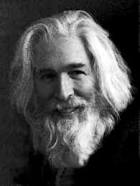
[* above photo taken from Tim Chartier's Twitter feed... if someone else deserves credit(?) for it, let me know]


Tuesday, January 10, 2017

Looming... Student Loan Debt


via HERE

For quite awhile now this country's student loan debt crisis has concerned me more than the housing crisis of 9 years ago ever did — the housing crisis had potential, if painful, solutions (some of which I suspect have been avoided)... I’m not sure the student loan debt dilemma has realistic solutions going forward. Most concern addresses the younger generations strapped with these loans, and the ramifications both for them directly and longer-term implications for the overall economy, but something I didn’t even realize was how many “baby boomers,” specifically over 60, are hampered by the problem as well!
This Marketwatch piece focuses on the issue:
In part:
“The number of older Americans with student debt is growing faster than any other age group, according to the CFPB, and it appears they’re struggling. Nearly 40% of federal student loan borrowers over age 65 are in default…”
For many it means, having Social Security garnished, in turn leaving them with poverty-level income in their retirement years.
Check out more about general student loan debt at Phil Ebersole's blog:
We’re in deep doo-doo, that, just like the housing bubble, no one seems to much talk about (perhaps because they have little positive or intelligent to say). Worse yet, we’ll soon have an Administration bent on concentrating yet more wealth in the few, while sending the rest into deeper, more drawn-out recession/depression. Long-term, there may be a solution as brick-and-mortar colleges go the way of brick-and-mortar bookstores, and the cost of education significantly comes down -- but that's VERY long-term; in the meantime several generations have a tough future ahead... tougher lives than their parents had.

Four years from now, it will once again be the Democrats screaming, “It’s the economy stupid!” …but will it already be too late? It remains a bitterly horrible irony that so many of those who voted for Trump and retrograde Republicans, will be those most adversely affected by what passes for their “policies.”


Monday, January 9, 2017

Puzzle... Goin' Fishin'


Came across yesterday's Parade Magazine at a coffeehouse this morning so looked at Marilyn vos Savant's column and found a clever little riddle... has the ring to it of a classic old 'lateral-thinking' type puzzle, so if you missed it here goes:

A fellow is in town to buy a 5-ft. fishing pole. Following the purchase he begins to board a bus home, but the driver informs him that objects longer than 4 ft. are NOT permitted on the bus. Disappointed, the fellow walks back to the store, only to emerge briefly later, still with the same fishing pole, and boards a bus with no problem. 
What has he done (...and no, the pole has not been collapsed, telescoped, or in any other way adjusted)?
.
.
.answer below
.
.
.
.
.
.
.
.
.
.
.
.
.
.
.
.
.
.
.
.
.
.
.
.
.
.
.
.answer:

he placed the pole diagonally in a 3 x 4 cardboard box and walked on-board with the box.


Interviews… anyone?


Have done ~40 transcribed interviews here (well, mostly at MathTango) over the years, so maybe can push it to 50 this year.  Always have a few possible names in the back of my mind, but if you are a math-enthusiast willing to be interviewed please let me know... 
You may be someone with a popular math-related book out or on its way, or someone with a blog or website you want to publicize a bit (though I may have reservations about some strictly commercial sites); or maybe you're involved in education or 'big data,' or some other applied area of professional math. Or finally maybe you simply enjoy talking math for some other reason. Don’t be shy… drop me a note at:  SheckyR [at a gmail.com acct.]

OR, if you're not interested in being interviewed, but know someone you’d enjoy seeing  interviewed feel free to send their name along (and if possible their email address).
Thanks in advance....


Sunday, January 8, 2017

"Unknown Unknowns"


For today, just this old classic reflection from Donald Rumsfeld:
"Reports that say that something hasn't happened are always interesting to me, because as we know, there are known knowns; there are things we know we know. We also know there are known unknowns; that is to say we know there are some things we do not know. But there are also unknown unknowns – the ones we don't know we don't know. And if one looks throughout the history of our country and other free countries, it is the latter category that tend to be the difficult ones."